


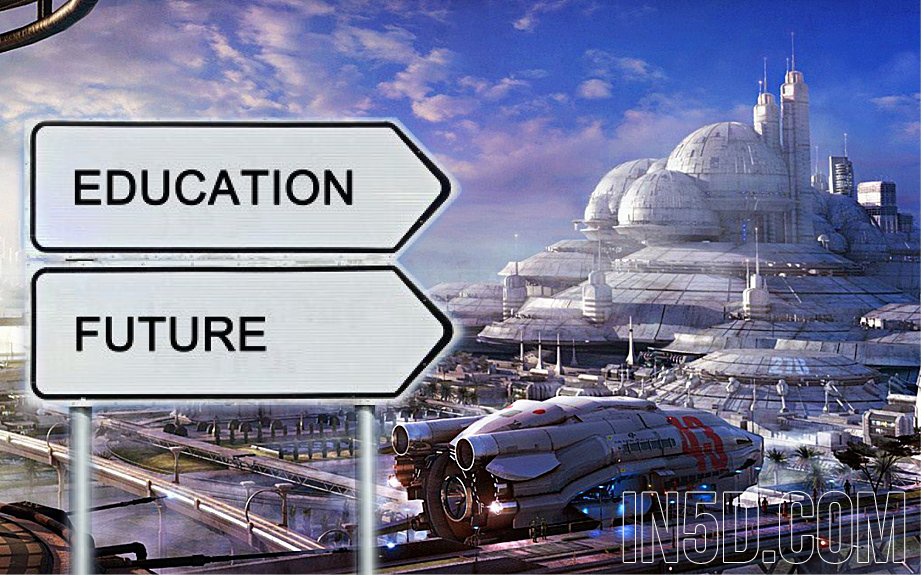
The Future of Education – A School You Would WANT To Attend!

by Michelle Walling, CHLC and Gregg Prescott, M.S.
If you had a chance to vote on what subjects of study our children would have in schools on the New Earth, what would they be? A balance of true galactic history, social interaction, math, and various artistic creative outlets seems to be a good mix. Whether you are a teacher, parent, or student, now is the time to decide how we will change the education of the indigos and crystals that have more strands of DNA activated than any other humans on the planet.
Donate to In5D
With over 6,000+ free articles and 1,200+ free videos, any donation would be greatly appreciated!
Much love for your kind donation,
Gregg
The current corrupt schooling agenda
Today’s public school system is built around programming our children to obey and to think outside of themselves. Schools have become businesses that are run by education boards that answer to the top domination and control group on the planet. Creativity and flexibility has been removed from the curriculum and teachers are frustrated and tired of holding children back from their amazing potential.
The history taught in schools is mostly a lie, created to cover up the real truth of The Vatican and Queen of England’s stronghold on the world. Although these forces seem like they are behind most of the illusion on this planet, the puppet strings are actually being pulled by the interbred Draconian families of the Rothchilds, Rockefellers, and other banking pioneers that control most of the wealth on the planet.
Almost every book in our educational system in the subjects of history, math, English, social studies, and science can be thrown away because the basis of each is to teach cover up stories in every single way possible. The plan has intertwined politics, finance, and religion with education in order to keep people in the dark about the truth of who they are in order to keep them enslaved in a system of control. It has been part of a brilliant plan of control on this planet to brainwash humanity in the most formative years of their lives, but the game is over and the truth has been revealed.
Related article: Twenty Questions They Refuse to answer in school
Private Montessori schools are the closest thing we have in the United States to sensible education, however it is still a far cry from where we need to be. Many people have chosen home schooling over public schools which is a better choice but if a GED is desired, one must still follow a curriculum.
The system has been set up to where a high school diploma simply shows that you were programmed enough to follow orders, and therefore you would make a good employee. Paying for college in order to get a higher paying job has become a cruel trap for our young people. The price of a college education may take several years to pay off and many young adults took out student loans with high interest that can never be paid back.
The system will collapse, including education
The whole economic system supports institutionalism and when the system collapses, so will the educational system. Humanity has to be ready to create a whole new way of thinking around what kind of curriculum would benefit our children most, how long they should stay in school each day, and what kind of food they will be eating in order to stay healthy.
Related: What to Expect in the Near Future
When Pluto entered Capricorn in 2008, we saw a collapse of the banking system, with the exception of the “Too big to Fail (Jail)” banks.

Pluto is known as the “Destroyer” and will tear down everything that is not in humanity’s best interests, which will allow us to rebuild them in a way that benefits humanity. Pluto stays in Capricorn until 2023. The last time Pluto was in Capricorn was in the 1700’s, during both the French and American Revolutions. Right now, revolutions are happening all around the world. This clearly shows us how astrology reflects the cycles of time and gives us an opportunity to learn from these lessons.
Right on schedule, we are seeing a collapse of money, government and religion as all three are used as forms of control in order to keep us subservient economic slaves to a failed system.
We are also entering the Age of Aquarius, which brings in a new energy that works in conjunction with Pluto in Capricorn. In other words, all systems of control will implode in order for the New Age to begin.
The first forms of education will involve many of our readers as you will be needed to help awaken those who have been asleep during this transition.
Related: How To Deprogram Yourself
Ancient studies
To get an idea of what school was like before domination and control, we can turn to The book Urantia Chapter 7 “Adam and Eve”:
The children of Adam, except for four years’ attendance at the western schools, lived and worked in the “east of Eden.” They were trained intellectually until they were sixteen in accordance with the methods of the Jerusalem schools. From sixteen to twenty they were taught in the Urantia schools at the other end of the Garden, serving there also as teachers in the lower grades.
The entire purpose of the western school system of the Garden was socialization. The forenoon periods of recess were devoted to practical horticulture and agriculture, the afternoon periods to competitive play. The evenings were employed in social intercourse and the cultivation of personal friendships. Religious and sexual training were regarded as the province of the home, the duty of parents.
The teaching in these schools included instruction regarding:
- 1. Health and the care of the body.
- 2. The golden rule, the standard of social intercourse.
- 3. The relation of individual rights to group rights and community obligations.
- 4. History and culture of the various earth races.
- 5. Methods of advancing and improving world trade.
- 6. Co-ordination of conflicting duties and emotions.
- 7. The cultivation of play, humor, and competitive substitutes for physical fight
Example of future studies
Although the subjects discussed in the Urantia book build a good basic foundation for education, higher learning classes would expand into subjects that will allow children will be excited about attending school. Examples of these kinds of subjects are:
Math– Geometry is the basic building block of all life. Math will take on a whole new meaning and new ways of arithmetic along with fun ways to calculate will be taught.
Cosmic Science– Identity and placement of Universes in our cosmos and the difference between free willed Universes and non free-willed Universes.
Universal Science– How planets, moons, and stars are sentient beings and how they all work together to form solar systems and galaxies.
Universal History– The history of the Universe including civilizations and placement in the Cosmos.
Creation Science– The study of how everyone and everything is connected from one Creator and how we contribute to that creation.
Human History– DNA studies, human genetics, and the history of humanity from Lyra to today, including the social statistics, behaviors, and characteristics of all humans in our Universe.
Human Rights- Constitutional Law on freedom and the Golden Rule.
Sexual Relations– The responsibility behind merging energies with another human and teaching the ability to decide whether another human body is created.
Universal Language– Learning the language of light which is understood throughout the Universe.
Universal Law– Learning the importance of Universal Law and how it relates to all sentient beings.
Astrology – Learning how to read and fully understand your birthchart.
Astronomy – Understanding the importance of stars, planets and constellations. Learning how the stars can show us the cycles of time along with how they can be used for navigation.
Sixth Sense Studies– Developing all of your innate gifts.
Meditation– Guided classes on how to safely travel the Universe with your consciousness, learning new meditation techniques, developing new ones.
Exercise– Yoga, Tai Chi, etc.
Galactic Ambassador Training– How to become a galactic ambassador, spaceship flight training.
Healing– Methods for keeping the body clear of negativity (reiki, quantum touch, etc…), responsible thinking, service to others.

Gardening– How to grow organic food and hemp for cultivation, different forms of gardening such as hydroponics, permaculture, etc…
Technological and Industrial Sciences– How to make almost anything from hemp, 3d printing, free energy technology, encourage free thinking and non competitive invention
Environment– The true importance of being stewards of the earth by living on her without making footprints and healing the environment.
Recycling– Maximizing what has been created in the past into something sustainable.
Council of Elder training– With the elimination of government, a Council of Elders training program will be facilitated to ensure that future elders will always be working in humanity’s best interests.
Music– All forms of music including history, composition, symphonic band and concert, and voice.
UFO Research – Classes on the documentation of UFOs through night vision goggles, how to interact with them, sky mapping, UFOs in Art History, etc…
Creative arts– All forms of creativity including art, dance, drama, and writing.
Community– How to contribute economically to your community through barter, volunteering, and communal caregiving for all children. Creative culinary classes and decorating houses for energy flow could be subjects.
Life Path Development – Helping people find their life path, based on their astrological charts, personal interests and past life experiences.
Spiritual Psychology– Learning how the body, mind, soul and spirit interact. Dream analysis, dream journals, counseling methods, past life regression techniques are included in this genre.
Changing the way school is structured
Besides subject study, ample social time should be given between classes and play time (or nap opportunities) should be allowed in the morning and afternoon. A “free” class could be created where a child can expand on any topic they wish with other children, ie. let the children teach the children. The length of time for classes should be less than one hour for each class, schedules should be individualized, homework should be a rarity, and the children should not be overworked or stressed. Class credits should be given for the interaction in community of gardening, building infrastructure, and caregiving.
School should be fun and the children will want to add as many classes as they can. Curriculum should be an interactive choice between the student, parent, and a counselor based on the capability of the child, and graduation of primary and secondary schools could be done at any age.
Careers in education
Education will need to be continuously re-created as more strands of our DNA are activated and more information is available to humans through our higher selves and our Akashic records. One of the most sought after jobs will be teaching these brilliant children and it will be one of the most rewarding careers to have. Education administrators will be free thinkers, organizers, and mediators, and will enjoy their jobs just as much as teachers.
Does this article give you any ideas about the future of education and the co-creation of the New Earth? If so, now is the time to begin brainstorming and to form groups on Facebook and other social media sites dedicated to revamping our education system. Change will have to happen on the community level by example and then spread throughout the world due to the success of one particular curriculum over another. Information and awareness about the corruption of our current system and what we are going to do about it is the key to moving forward as free-willed humans.
What ideas do YOU have? Leave your comments below!
Sending you all infinite Love & Light,
Gregg
Click here for more articles by Gregg Prescott!
In5D PATREON: https://www.patreon.com/in5d Add YOUR name to our In5D Wall of Gratitude with a minimal donation on Patreon!
About the Author:
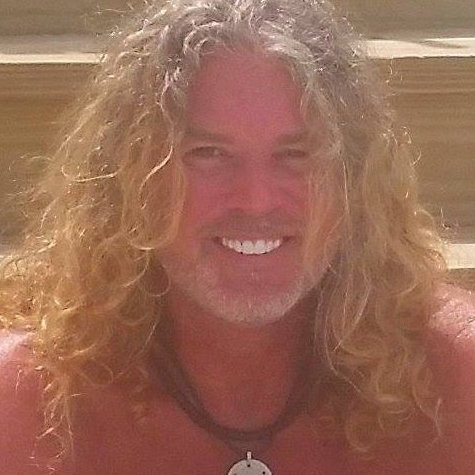 Gregg Prescott, M.S. is the founder and editor of In5D and Zentasia. He co-owns In5D Club with his beautiful wife, Ali. You can find every episode of “The BIGGER Picture with Gregg Prescott” on Bitchute while all of his In5D Radio shows are on the In5D Youtube channel. He is a visionary, author, a transformational speaker, and promotes spiritual, metaphysical and esoteric conferences in the United States through In5dEvents. Please like and follow In5D on Gab, In5D Telegram, In5D Bitchute, Instagram, TikTok, Rumble, Twitter, and In5D on Facebook!/
Follow In5D on Patreon, Telegram, Twitter, Bitchute, TikTok, Instagram, Facebook, YouTube, Gab, and Truth Social @greggprescott