


History Of The Universe And Our Earth Origins

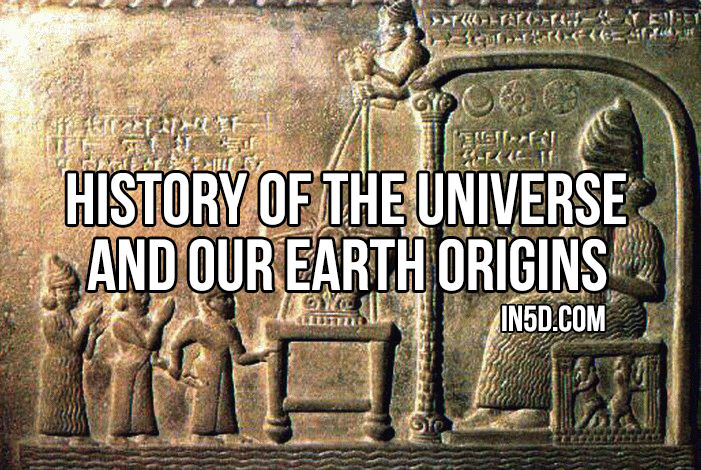
Dan Winter explains our alien ancestry dating back to the Anunnaki, the Seraphim, and the Nephilim. Learn about the Alpha Draconians, Andromedans, Nibiru, the Dogon, Orion wars, DNA manipulation and much more!
video at end of this article 🙂
Donate to In5D
With over 6,000+ free articles and 1,200+ free videos, any donation would be greatly appreciated!
Much love for your kind donation,
Gregg
by Dan Winter
Talk about all done with mirrors…. Remember what they said about the electron (’there is only ONE, it just GETS AROUND’), might be true of Thoth..
Thoth = Pure Rigelean Orionian? = the Illumined Enochian Master = Quetzalcoatl = Hermes = Enki’s Son = Raismes of Aphra = The Atlantean = Tut!? (=Jesus?!)… Built the Pyramid, Started the Calendar…
Superman changing capes… doesn’t hold a candle to this fellow. But what have we learned about “Redeeming” our gene pool?
In addition to Simeon and Maia’s detailed “Temple Doors” websites on Thoth, (The Temple of Thoth – excerpted below)
Thoth is also the stated author/ inspirator of today’s modern Templar Star-Mapping Time Fabric Repair / Oritronic vs Metatronic Grid Literature.
We have long been trying to sort out the true intent behind the Draconian and Reptilian cultures from the Orion sector, involvement in cooking up our DNA. While particularly on this website, the Draco stories of horror have gotten heavy press, in fact the simplistic notion that the Draco and Dragon roots are all man eating and blood thirsty (Firefights under Dulce?) is simply not true. Gardner does forget to give us Draco Dragon’s misdeeds and downside, but he does at least remind us that maybe our DNA needed to have its royal (’grail’) families bred like showdogs for millennia.
While it is true that the fallen or Nephite portion of that (what I consider parallel to the Anunnaki) culture, have perpetrated some horrific deeds in their babysitting of us as a petri dish (some true physics behind the vampire myth for example). On the other hand some of the highest forms of potential psychokinetics, star inhabiting, and faster than light DNA — seeds come to us precisely BECAUSE we have been sown from such a potent (if sometimes literally God-awful) family tree.
Thoth is an educational case in point in this regard. Rarely do we compare specific detailed information which explains that he (also named Quetzalcoatl- THE subject of “The Tutankhamun Prophecies: The Sacred Secret of the Maya, Egyptians, and Freemasons
Thoth states unequivocally that he is of PURE ORION / Rigelian descent. Putting these 2 notions together may give us new insight into the Anunnaki Origins in the Orion sector, AND why for example Thoth (as Hermes) built the Pyramid complex as a Golden Spiral star map to Orion’s belt stars…
Quote from Eldorado Analysis of North American StarMaps:
Dolmen structures like Giza’s pyramids (massive tuning symmetry with respect to oribital mechanics AND charge embedding) modulate planetary spin to stabilize them thru gravity effects like planet lineups, and such things as “.. severe orbital problem due to a glancing blow from a passing meteorite. This resulted in a rapidly decaying orbit…” see the ET Origin? of THE EXPERIMENT in Interplanetary Stabilization.. (Includes more on Thoth’s role.)
Job 38:31
“Canst thou bind the sweet influences of Pleiades, or loose the bands of Orion?”
In Sitchin’s “Calendar Tales” from “When Time Began: Book V of the Earth Chronicles
The point here is the history of Thoth’s origins gives us a major new clue. (reference Sitchin) Thoth was taught by his Dad Enki, how to raise people from the dead. His brother Marduk / Ra was not. (Another possible hint to his identity with the Jesus myth). The resulting squabble lead to Ra’s booting Thoth out of Egypt precipitating his MesoAmerican life as Quetzalcoatl etc. What I find fascinating is if we combine Sitchin’s detailed scholarship demonstrating Thoth is Son of Enki, brother of Ra.
And yet Thoth self proclaims (below excerpt) “I am pure Rigelian blood from Orion”
SO… we may be getting a little bigger picture of our Anunnaki genepool planetary origins.
The word Origin is rooted in the word Orion. We have long speculated that Enki’s Dad AN, was of Orion blood. (Which the links here may confirm)..
An’s son’s (Enki/Adonai versus Enlil/Yalweh) squabble over WHETHER OR NOT TO EN-SOUL / EMPOWER our genepool, their experiment, became the root of almost every war in the history of our planet, including and especially:
- the Enlil nuclear blast desertifying Sinai
- Enlil’s treachery to destroy Enki’s haven which was Atlantis / Thule
- and especially the Cain / Abel battle of brothers which is today labeled the Arab /Israeli war
(See Gardner scholarship “Genesis of the Grail Kings: The Explosive Story of Genetic Cloning and the Ancient Bloodline of Jesus
It would be natural for Thoth descending from the Enki side of the war of the brothers (aka “East of Eden”) to inherit the Adonai/Enki penchant for trying to slip some psychokinetic Muscle into us as a DNA experiment.
This is very consistent with the Andromedan rumor that the Sirian/Orion trading house paid by the Orion culture to build Nibiru for gene splicing, was rebellious against the Empire. As a result, EA’s more ingenious kids (Thoth) slips a mickey into the (N/H)-Ibiru genetic tea. The Andromedan’s called this Paa Taal or “11th Dimensional” DNA. This becomes the word Ptah, in Egypt who some (Helios for example) believe is identical with the person Aleph Hyperion.
What may be more fascinating is WHY the AN/EA Orion trading house who’s family became Thoth, wanted to rebel against the strict Orion Queen laws against spontaneous and psychokinetic and unregulated DNA crossing. On the high side (if we are to believe “Inanna Returns

To do this required millennia of planning to get soul family groups back into the gravitic and familial pressures which could squirt them DNA wise back into stars super-luminally. (Anna Hayes discusses this in detail in terms of DNA braids.) This is what Gardner describes as the ’raising of the high-ward fire-stone’ or SHEM. (Basically the symmetry of implosion -familialy, tectonically, architecturally, glandularly, genetically).
Essentially in summary, if you split off a branch (SCION / jon) of a DNA familial, without the responsibility to provide a sacred temple format to re-integrate the memory of that bloodline back into time lord star families, THEN YOU GET BAD KARMA. (Your hand gets slapped by some Galactic Board).
In “Inanna Returns” this translates into the Anunnaki being told (by the Guardian Alliance?) that their present kin are stuck back on Earth till they help harvest redeem the whole errant genepool they started! This becomes a fearsome task. What I propose here is we become more cognizant of what Temple like, well star- mapped, and astrologically embedded – practices and rites for family groups WILL get their BLISS back into the star wormholes (perSUNall-eye-tied).
A story Michael Heleus once suggested is that the Orion Syndicate Terror driven rulership of Sirius (Anunnaki Outpost), produced resentment there. The politics of fear eventually bred a kind of rebellion inside the wealthy EA / AN trading house (Thoth’s Grandpa). So the urge to slip some ’mickey’ to the same Borg cult which had fostered the “Orion Wars” may have been brewing in Thoth’s bloodline for sometime.
The combination of good gene splicing skills in EA’s family, combined with the good fortune of having Orion investment in Nibiru as a gene splicing enterprise for Gold (powder) mining on outpost EArth, may have been too tempting to resist some uprising. Anunnaki and Nibiru/Hibiru being in many ways synonyms here, probably the Hevree / Hiburu (ones of the ’crossing over’), may have held a bit of resentment in the way their genes were CROSSED OVER originally between reptilian and humanoid.
The passion / gland empowered side of the family line takes the high side in the Enki against Enlil brothers, and similarly in the Marduk/Ra versus Thoth brothers of the next generation. Interesting how the (Turgenov) – Sins – or yearnings – of the fathers visited on the soul directions of the sons. It took a fair amount of trickery to get such radically self replicating DNA droids installed on the mining planet, without arousing too much suspicion on the home star.
One interesting story was in the original story of Enoch. He was the pride of the DNA’s droids of Enki’s fleet. He was the one submitted back to the Orion council when they demanded a specimen of the result of the genetic experiments on Earth, after they learned that the Anunnaki had crossed in their OWN DNA!
And that is how the story of Enoch/scribe began with his epoch tale of travel to Orion Star home… (The word H’Ur-tak – author: “Keys of Enoch” – means “Light from Orion”).
This was all part of the Enki-Thoth subterfuge against Enlil and later Marduk. (And why Enki & Thoth had to start Atlantis/Thule to hide Cayin’s kids).
What I like is that eventually we – our gene pool – gets to be the bullet in the Draconian furnace. (Something Scorpio in me likes sting…) The revolution against the E-LIZ-a beths continues? The Archeo-Geometry of America’s Spiritual Destiny (Individuation vs. ’new world order’ revolution – a microcosm of galactic Orion wars… A true to life galactic sequel to the “Star Wars, Episode V: The Empire Strikes Back
In any case, very early on Thoth gets something of a reputation for defending the naive DNA droids here (us), against the parasitism of his more vampiric (Draconian) cousins.
If we are interpreting the Thoth myths properly, perhaps his education strategies still today put him at the forefront of those who would protect our genetic dignity in the face of galactic parasites quoted from link below here:
“…Thoth served to enlighten humans in that age that they were not the spawn of the Nephilim, the fallen angels of Lucifer. He revealed to them that although the Fallen Lords had greatly tampered with their mortal bodies through eons of genetic manipulation, human kind were still ’angels unaware’”

This whole plot gets much more thick if we take even slightly seriously Maurice Cotterell’s book long scholarship (“The Tutankhamun Prophecies: The Sacred Secret of the Maya, Egyptians, and Freemasons
So let’s look the other names of Thoth…. Let’s see, he is:
Thoth
Toth-Mus-Zurud
“I came within a vesica of Light, a merkabah of golden and blue-white fire, from Rigel, through the ’Asefetas’ (the Belt of Orion), and descended unto ’Rastaru’ (Rastau), the etheric manifold of the plain of Giza. With me, I brought the Enochian Table…” from: The Historical and Mythical Thoth
(insert from Dan – not from link: Now as I recall, Michael Ash, chief time empath of Montauk assured me personally that the Rigelian crew at Montauk were some of the most arrogant and heartless ET types to work with… however we probably should not generalize here. Working with Earth’s primitives could probably try the patience of a king…. Cayin…)
Thoth the Atlantean
Raismes of Aphra
“When I returned to Egypt, the priests of the Great Temple saw beyond my physical body, into the auric veil which surrounded my form, and they knew that He who is the Tat-tet, the Tehuti, had returned. To those of my family and personal fold, I was known to them as Shansi, ’The Beloved’.”
’Thoth’, ’Toth’, Tat-tet and ’Tehuti’ are all forms of the same root, which are titles meaning, ’one who gives breath to’, or the ’Grand Communicator’. Toth-Mus-Zurud was known in Atlantis as the ’Sword of Orion’. His origin is Ultra-Terrestrial, from the ’Eighth Sphere of Heaven.’ He tells me that this denotes the dimension of his realm, which is the eighth. In that dimension he contains the genetics of the Light Races of Orion with the sun of his creation being Rigel.
THE HIEROPHANT
Thoth Hermes Trismesgistus
Thoth is known in mythos as a God of the Egyptians, later adopted by the Greeks and re-named “Hermes.” As a God-Being, he was venerated in Egypt from at least 3000 BCE. He was given credit for inventing hieroglyphic writing. He was known as the “Scribe of the Gods,” and as such, was the recorder of all human deeds. It has also been said through the ages, that the Great Thoth brought to mankind the sciences of law, astrology, anatomy, medicine, chemistry, art, magic, alchemy and architecture.
There are certain learned scholars of the past who equated Thoth with the biblical prophet Enoch, saying that they were one and the same. Iamblichus declared Thoth to have been the author of twenty thousand books, while Manetho credited him with having written more than thirty-six thousand. The Greeks called Thoth “Hermes Trismesgistus,” the latter name meaning “Thrice Great.”
The ancient Egyptians often depicted Thoth as Ibis-headed, although he was also portrayed at times with the head of a baboon. There are ancient texts which claim that Thoth was the architect of the Great Pyramid of Giza. The most famous books attributed to him are “The Emerald Tablets” and “The Pymander.”
Thoth, the Illumined Enochian Master
Thoth served to enlighten humans in that age that they were not the spawn of the Nephilim, the fallen angels of Lucifer. He revealed to them that although the Fallen Lords had greatly tampered with their mortal bodies through eons of genetic manipulation, human kind were still ’angels unaware.’”
End quotes from Simeon and Maia…. (This last note could be quite comforting after noting some of the manipulative nature of the Mormon debacle – Moroni’s Intent, Getting Genetic Immortality-Pure Principles from Angels & Alphabets
In this regard, since we have been reviewing Angelic and ET intent, to re-invent our planetary genetic origins.. in the process we do keep tripping over this “Thoth” fellow..
Image: Pixabay
See EXCLUSIVE In5D videos and ad free articles on Patreon for a minimal donation! https://www.patreon.com/in5d
Follow In5D on Patreon, Telegram, Twitter, Bitchute, TikTok, Instagram, Facebook, YouTube, Gab, and Truth Social @greggprescott