


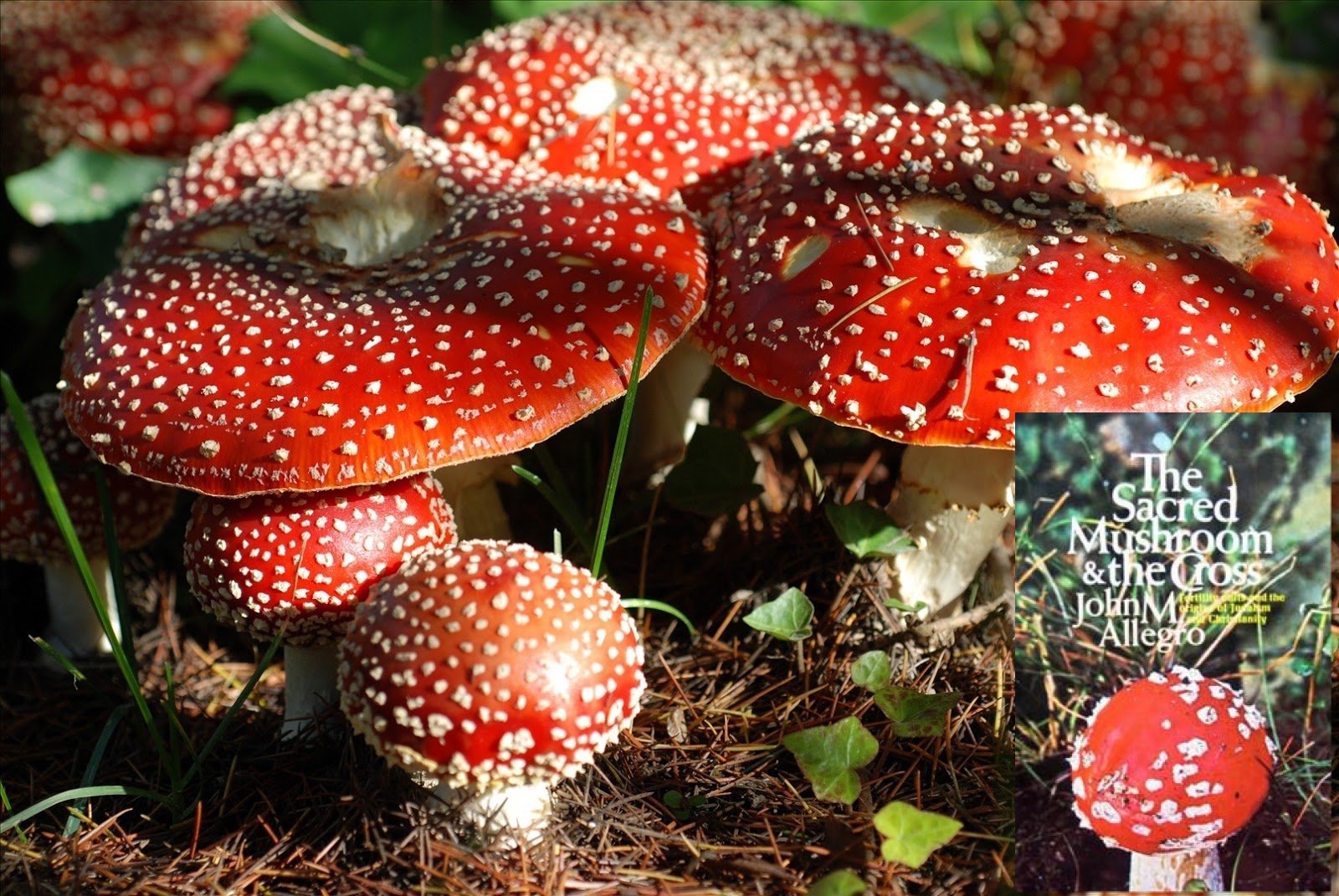
John Allegro’s “The Sacred Mushroom And The Cross”

The actual interview is in English.
Gnostic Media is happy to present this exclusive video of John Marco Allegro in an interview with Van Kooten & De Bie. Recorded for and broadcast on Dutch TV in December 1976, this is the only available video of Allegro — the Dead Sea Scrolls scholar and author of 13 books,

Donate to In5D
With over 6,000+ free articles and 1,200+ free videos, any donation would be greatly appreciated!
Much love for your kind donation,
Gregg
The Dead Sea Scrolls were written between 200 BCE and 68 CE, and give insight into the religious life and thought of a Jewish sect based at Qumran by the Dead Sea and usually identified as Essenes.
Allegro believed the scrolls could help us understand the common origin of three religions: Judaism, Christianity and Islam. He hoped they might be able to bring together scholars of each tradition in studying their common heritage without the barriers of religious prejudice.
This would mean making the texts accessible to all. Allegro published the sections of text allotted to him in academic journals as soon as he had prepared them, and his volume (number five) in the official series Discoveries in the Judaean Desert was ready for the press by the early 1960s.
He continually campaigned for the publication of all scroll texts. However, his colleagues (all ordained priests in the Catholic Church) took a different approach, and little else appeared until 1991.
Allegro saw himself as a publicist for the scrolls. His books, talks and broadcasts promoted public interest in the scrolls and their significance.
At first, the rest of the team encouraged his efforts, which after all were intended to help fund their research. But they thought he went too far in making assertions about the parallels between Essenism and Christianity which they thought were unsupported by evidence and designed to raise his personal profile. He was accused of stirring up controversy at the expense of scholarship.
https://www.youtube.com/watch?v=mOu9tV6uy2E
See EXCLUSIVE In5D videos and ad free articles on Patreon for a minimal donation! https://www.patreon.com/in5d
Follow In5D on Patreon, Telegram, Twitter, Bitchute, TikTok, Instagram, Facebook, YouTube, and Truth Social @greggprescott